When the 44west rowing team embarked on their transatlantic challenge, their survival and success depended not just on skill and courage but on the reliable performance of their solar photovoltaic (PV) system under some of the harshest marine conditions on Earth. This journey highlights a broader reality: as the global solar sector accelerates, independent testing and verification are essential to prove safety, durability and performance. Whether in extreme environments or everyday use, trusted validation is what turns solar technology into dependable, scalable, clean energy.
What is a solar PV system?
PV systems are an increasingly important part of the global energy mix. The International Energy Agency (IEA) estimates they accounted for roughly 7% of global energy generation in 2024, a figure that is increasing.1
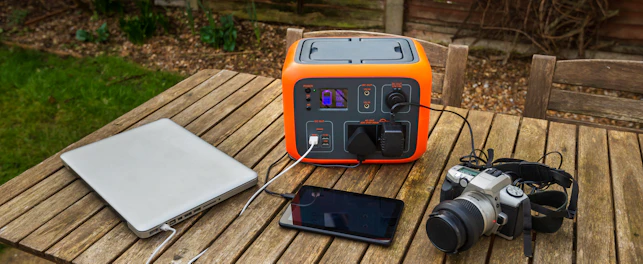
At the heart of a PV system is the panel. Panels are composed of multiple individual solar cells, each containing semiconductor materials that react when exposed to sunlight. Photons from the sun dislodge electrons in the material, e.g. silicon, generating direct current (DC) electricity. An inverter then converts the DC electricity into alternating current (AC) electricity, which is required for most appliances.
Solar on 44west
For the team on 44west, the priority was a power source that was light, sustainable and reliable. Traveling without a conventional backup system, they had to trust their solar PV system to power vital onboard equipment, like navigation and communications. They also needed enough energy to create and upload social media messages, allowing people around the world to follow their progress and helping them promote their fundraising for rrreefs.
The mid-Atlantic is one of the harshest environments in which a solar PV system can operate:
- Strong winds and waves can place significant mechanical stress on the equipment, including hidden cracks, structural deformation or fixture failures
- Ultraviolet (UV) exposure can accelerate material degradation, while extremes in temperature can impact material durability
- High humidity and temperature can accelerate the aging of packaging material, which may induce potential-induced degradation (PID) that results in a severe decrease in solar panel power efficiency
- Sea salt particles can corrode metal solar panel components, such as frames and junction boxes, and battery grid lines, leading to increased resistance, power attenuation and leakage
In such a harsh environment, the team needed to trust their solar PV system, as even the smallest failure in a panel could have a significant impact on their ability to race effectively.
This trust was put to the test daily. The system’s consistent energy yield of between 1.2 and 1.5 kilowatt-hours per day under variable conditions was not just a number to monitor. It was the power that kept the critical navigation systems online, the desalinator running and enabled daily check-ins with loved ones and mission control. In one poignant instance, after days of rough seas, a stable period of sunshine allowed the panels to fully charge the satellite phone battery, enabling a crew member to make a clear, uninterrupted birthday call home – a moment of human connection powered entirely by the sun.
Testing means trusted
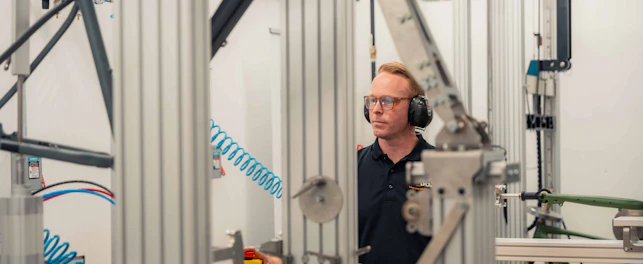
To ensure the team could trust their solar PV system, we conducted a comprehensive range of safety, performance and environmental resilience tests on the 44west solar PV system:
- Visual inspection – since internal faults are often reflected externally, and even the smallest defect can result in corrosion and leakage through the action of humidity and saltwater ingress, we conducted a visual inspection in line with IEC 61215:2021 MQT01 and IEC 61730:2023 MST01
- Insulation resistance – seawater and salt spray are good conductors, so a failure in insulation could result in the solar PV frame becoming electrified, putting both the crew and onboard systems at risk. In line with IEC 61215:2021 MQT03 and IEC 61730:2023 MST16, we measured the resistance between the internal circuit of the solar panel and the metal frame to verify that the electrical isolation was intact
- Wet leakage current testing – water can form leakage channels, resulting in power loss or safety hazards. To test for this, we simulated the worst wet leakage scenarios, in line with IEC 61215:2021 MQT15 and IEC 61730:2023 MST17, to ensure that even if the panel was completely soaked in seawater, it would continue to function safely
- Performance testing – in line with standard test conditions (STC) (IEC 61215:2021 MQT15 and IEC 61730:2023 MST17), we measured key electrical performance parameters, such as maximum output power and efficiency, to confirm expected power output and ensure reliability
- Environmental tests – since 44west needed to operate in some of the harshest environments on Earth, we subjected the solar PVs to a range of tests designed to replicate the factors they would encounter:
- Outdoor exposure test – real-world condition simulation (IEC 61215:2021 MQT08)
- Salt mist corrosion test – simulates long-term marine exposure (IEC 61701:2020 Test Method 10)
- Sand abrasion resistance – checking durability against airborne salt and grit (IEC 60068-2-68:1994 LC1)
- Humidity freeze cycling – assessing resistance to moisture and temperature swings (IEC 61215:2021 MQT12)
Our test program showed the 44west team’s PV panels could deliver reliable power and would remain structurally and electrically stable even under extreme marine conditions. The panels demonstrated strong energy output in both standard and low‑light environments, resisted corrosion, humidity, UV exposure and mechanical stress, and passed critical safety checks such as wet‑leakage and insulation testing.
The results confirmed the system’s durability, safety and capability, but the real value went far beyond a simple pass/fail certificate: it gave the 44west team predictive confidence. By knowing the exact limits and resilience of their solar setup, they could make informed, strategic decisions throughout the voyage – when to push communications equipment, how to manage energy‑intensive periods and when to conserve power. This allowed them to focus on rowing and winning the race, rather than worrying about potential system failure. This shift from uncertainty to clear, evidence‑based decision‑making is the true outcome of rigorous testing and verification.
Beyond 44west
Despite the PV effect being discovered in 1839 and the first practical silicon solar cell being developed in 1954, solar power did not become competitive with fossil fuels until the 2000s.2 In the 2010s, rapid cost reductions, supportive policy frameworks and rising consumer demand triggered a significant global market expansion. At that time, solar PV capacity was estimated at around 40 gigawatts; by 2024, it had surged to approximately 2.2 terawatts. This trajectory is set to continue between 2025 and 2029, with annual additions forecast to rise from 655 to 930 gigawatts, reaching more than six terawatts of global capacity by 2029.3
This rapid growth has fueled a rising demand for trusted testing to validate performance under increasingly diverse and extreme conditions. But testing delivers far more than a technical pass/fail outcome, it:
- Informs better design and engineering decisions
- Builds user and investor confidence
- Strengthens long-term financial models
- Accelerates the global shift away from fossil fuels
As solar deployments expand into offshore environments, arid deserts and high-altitude regions, insights from extreme applications, such as the 44west crossing, become universally relevant. The industry now demands more than panels that simply function; it requires systems whose long‑term performance, degradation rates and climate‑specific behavior can be accurately predicted and incorporated into operational and financial planning. This is where next‑generation testing and data analytics become indispensable, transforming solar technology from a promising solution into a predictable, bankable and globally scalable energy source.
SGS solutions
The work we have done with the 44west team represents just part of our capabilities in the solar energy sector. Our comprehensive solar panel testing services support manufacturers, developers and operators across the world with:
- Environmental and marine durability testing
- Performance benchmarking and degradation analysis
- Corrosion and ingress protection assessments
- Mechanical load and impact resistance verification
- Failure analysis and advanced diagnostics
- Certification support and life cycle assurance
These solutions help clients improve product quality, enhance reliability and support market entry with confidence. Discover more about our solar services.
IMPACT NOW for sustainability
Sustainability is in our DNA. Through our four IMPACT NOW for Sustainability pillars – climate, nature, ESG assurance and circularity – we deliver innovative solutions that enable smarter decision-making, regulatory compliance and environmental responsibility. As part of our commitment to a climate-neutral, nature-positive and pollution-free future, the climate pillar includes comprehensive solutions to help businesses in the renewable energy sector, including dedicated solutions for solar. Learn more about IMPACT NOW for sustainability.
Enjoyed this article?
Find more news and updates in our Consumer Compact newsletter >
Delivered direct to your inbox
Subscribe to Consumer Compact >
References
© SGS Société Générale de Surveillance SA.