It sets out SGS United Kingdom’s actions in 2024 to ensure that slavery and human trafficking did not take place in our supply chain nor in any part of our business. It also sets out the SGS Group’s actions and our current plans for the future.
Group business and structure
SGS is the world’s leading testing, inspection and certification company. With more than 99,000 employees, SGS operates a network of more than 2,500 laboratories and business facilities around the world helping to ensure quality and integrity of products and systems. The SGS Group’s service portfolio also extends to provision of employment agency activities.
SGS SA is the ultimate parent company of SGS United Kingdom. All subsidiaries of SGS SA and SGS SA itself are referred to as the “SGS Group”.
SGS Group approach to human right and modern slavery
The SGS Group has recently published its SGS 2024 Integrated Report, encompassing the environmental and societal impacts of our business activities using our Value to Society (V2S) model. The report also includes our Human Rights approach and commitments. Likewise, our Sustainability Ambitions 2030 sets human rights goals that enable us to create value where we operate. By 2030 we aim to ensure that at least 90% of our expenditure is with suppliers that have agreed with our Code of Conduct principles and we will continue developing our human rights due diligence program to avoid violations across our supply chain.
Legal and compliance policies
Human Rights Policy
SGS SA’s Human Rights Committee is chaired by our Chief Executive Officer and oversees compliance with human rights in all affiliates of the SGS Group. The Committee implemented a publicly available Human Rights Policy and SGS Diversity, Equity and Inclusion Policy which mandates SGS affiliates to protect and respect human rights, including in the selection and management of employees, suppliers and business partners. The SGS Group Diversity, Equity and Inclusion Policy (DE&I) was released in 2024, outlining the principles and expectations for DE&I within SGS.
SGS has also created a Human Rights Taskforce, with the purpose of coordinating our global approach to human rights, including actions to prevent, mitigate and remediate any adverse impact present in our value chain. The Taskforce is comprised of senior representatives from eight different functions that play a role in the SGS Group’s approach to human rights, steered by Corporate Sustainability.
Our Code of Integrity - our employees and representatives
For many years the entire SGS Group has operated under a publicly available Code of Integrity applicable to all employees, consultants, joint-venture partners, agents, subcontractors and anyone acting on behalf of, or representing, SGS. This Code was refreshed in 2024 and contains a clear prohibition on child labor and forced labor, breach of which will result in disciplinary proceedings or termination of contracts. It also addresses many other areas of ethics, trust and human rights and the mechanisms by which one can report concerns. It includes topics such as freedom of association and discrimination, working hours and health and safety.
All new employees are trained in the Code of Integrity upon joining SGS and all existing employees and contractors undertake an annual course with regular refresher training.
Our supplier Code of Conduct
SGS United Kingdom and its affiliates procure equipment, consumables, property and utilities for the provision of our services. We also purchase manpower through sub-contractors, temporary/agency staff, recruitment agencies, professional advisors and other services such as facilities management services.
The SGS Supplier Code of Conduct is publicly available and sets out SGS’s requirement that across all tiers of the supply chain suppliers operate a zero-tolerance approach to modern slavery and that non-compliance can result in contract termination. SGS United Kingdom requires vital suppliers to commit to our Supplier Code.
Our supplier due diligence process
The SGS UK Procurement and Quality functions utilize a desk-based assessment to obtain information from new and selected existing suppliers to determine their ethical risk rating. This rating dictates frequency and depth of the review to properly monitor compliance with the Modern Slavery Act (MSA). We currently focus on our existing suppliers by spend and operational criticality. We also specifically screen suppliers from higher risk geographical areas and/or offering higher risk services or goods such as security, cleaning, catering, waste, laundry, logistics, hospitality and branded merchandising products. In the event that we judge a supplier to be potentially high risk (on the basis of the screening and pre-qualification stages) we will undertake a more detailed evaluation of their operational practices.
Our training
As part of SGS’s program of annual integrity training we provide global e-learning on human rights, which has been translated into 19 languages. The training is mandatory for all SGS employees and covers the human rights issues identified in our Human Rights Policy, as well as reporting and support channels available for employees.
Reporting modern slavery
For many years SGS SA has had an established Integrity Helpline available to employees and suppliers to enable confidential and anonymous reporting of possible legal and policy violations without recrimination. This is operated by an external agency. Reports can also be made directly to the Compliance function in Switzerland or the UK. Details are contained in the Code of Integrity, the Human Rights Policy, the Supplier Code of Conduct, on our internal and external websites and in our Integrity Training. We remind our staff and suppliers of the Helpline by which they can report issues involving modern slavery and highlight the process of escalating perceived issues.
Effectiveness of our Modern Slavery Act (MSA) initiatives
SGS United Kingdom did not detect any violations of the MSA within our supply chain or business activities in 2024. We shall continue to review suppliers and shall report on the progress of all MSA initiatives in our Modern Slavery Statement next year.
This extends to the SGS Group commitment to transparent reporting of all human rights issues and performance through the Annual Report and the Corporate Sustainability Report.
2025/2026
SGS plans to continue its human rights due diligence to identify, prevent and mitigate human rights risks through its company risk management framework. Likewise, the Human Rights Taskforce will continue working together with the SGS Group on identifying and implementing additional mitigation actions where needed. Furthermore, the SGS Group will continue to annually update its human rights training and will work on further promoting the utilization of the Integrity Helpline and other reporting channels for human rights violations.
April 2025
This Statement is made pursuant to the Modern Slavery Act 2015 and has been approved by the Board of Directors of SGS United Kingdom Limited.
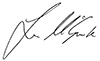
On behalf of the Board (signature of James McGurk, Managing Director)
Inward Way, Rossmore Business Park,
CH65 3EN,
Ellesmere Port, Cheshire, United Kingdom