In the ever-evolving landscape of Tanzania's petroleum market, ensuring compliance with stringent regulations is paramount for distributors and retailers. One crucial aspect of this compliance is the accurate testing of petroleum products to guarantee their quality and safety. SGS's XRF testing services provide a reliable and efficient solution to this challenge, offering a comprehensive analysis of oil products to meet Tanzania's strict petroleum regulations.
Evolution of fuel regulatory requirements in Tanzania
Starting from early 2000s, Tanzania authorities have been undertaking consistent step to restrict requirements towards petroleum products with the aim to improve public health and reduce environmental impact.
As early as 2003, a national phase-out action plan was developed, tied to commitments in the Dakar Declaration of June 2001 on banning leaded gasoline across Sub-Saharan Africa. Led by the Energy and Water Utilities Regulatory Authority (EWURA) the country has shifted to importing unleaded and lower-sulfur liquid fuels. This activity has been supported by the Tanzania Bureau of Standards, which has developed a clear regulatory and policy-driven framework.
Namely, the following documents have been enforced in Tanzania, some of them valid for the whole East African Community (EAC), containing specific requirements to lead and sulfur content:
- TZS 672:2022 / EAS 158:2019 for automotive gasoline (premium motor spirit)
- TZS 674:2022 / EAS 177:2019 for automotive gasoil (automotive diesel)
- TZS 673:2016 for heavy fuel oils
- AFQRJOS (Aviation Fuel Quality Requirements for Jointly Operated Systems) for Jet A-1 aviation fuel
Lead-free and low-sulfur fuels have huge health and environmental implications. Lead-free gasoline in cars and trucks prevents brain damage, especially in children, and avoids soil and water contamination. Low-sulfur diesel and other fuels reduce fine particle emissions that harm lungs and hearts, prevent acid rain and enable lower emission vehicle.
As per Section 179(1) of the Petroleum Act, Cap 392, one shall not distribute petroleum products in Tanzania unless such products conform to quality, safety and environmental specifications set out in the enforced regulations.
EWURA is mandated to monitor petroleum quality and standards. Legal actions are being taken against petroleum operators whose products do not conform to the required standards, as outlined in Section 179(2)(a) and (c) of the Petroleum Act, Cap 392. These actions include closing non-compliant facilities and imposing fines.
The role of XRF in petroleum products testing
X-ray Fluorescence (XRF) spectroscopy plays an important role in quality control across the petroleum value chain – from crude oils to refined fuels and lubricants – because it provides a fast, non-destructive, cost-effective and accurate way of determining elemental composition in liquid samples. XRF measures the characteristic X-rays emitted by elements when they are excited by an X-ray source.
XRF methods, standardized by organizations like ASTM and ISO, are widely accepted for ensuring compliance with the limits imposed on certain elements in fuels – especially sulfur (S) and lead (Pb) - by governments and environmental agencies.
Among the different XRF techniques, Energy Dispersive X-ray Fluorescence (EDXRF) has become especially valuable in the petroleum industry. This method uses a solid-state detector to directly measure the energy of emitted X-rays.
EDXRF is the method of choice for determining S content in gasoline, diesel, kerosene and jet fuels. It can simultaneously detect multiple elements in petroleum products, including metals like Ni, V, Fe, Cu, Zn and Pb.
Beyond meeting regulatory standards, XRF testing also plays a key role in helping market players maintain consumer trust and loyalty. In a competitive market, consumers are increasingly concerned with the quality and safety of the products they purchase, especially when it comes to essential commodities like fuels. By ensuring that their products undergo rigorous testing and adhere to industry regulations, distributors and retailers can demonstrate their commitment to consumer safety and satisfaction.
EDXRF capabilities in Dar es Salaam, Tanzania
Since May 2024, our laboratory in Dar es Salaam, Tanzania has been offering testing to identify lead and sulfur in liquid fuels using Energy Dispersive X-ray Fluorescence (XRF) spectrometry.
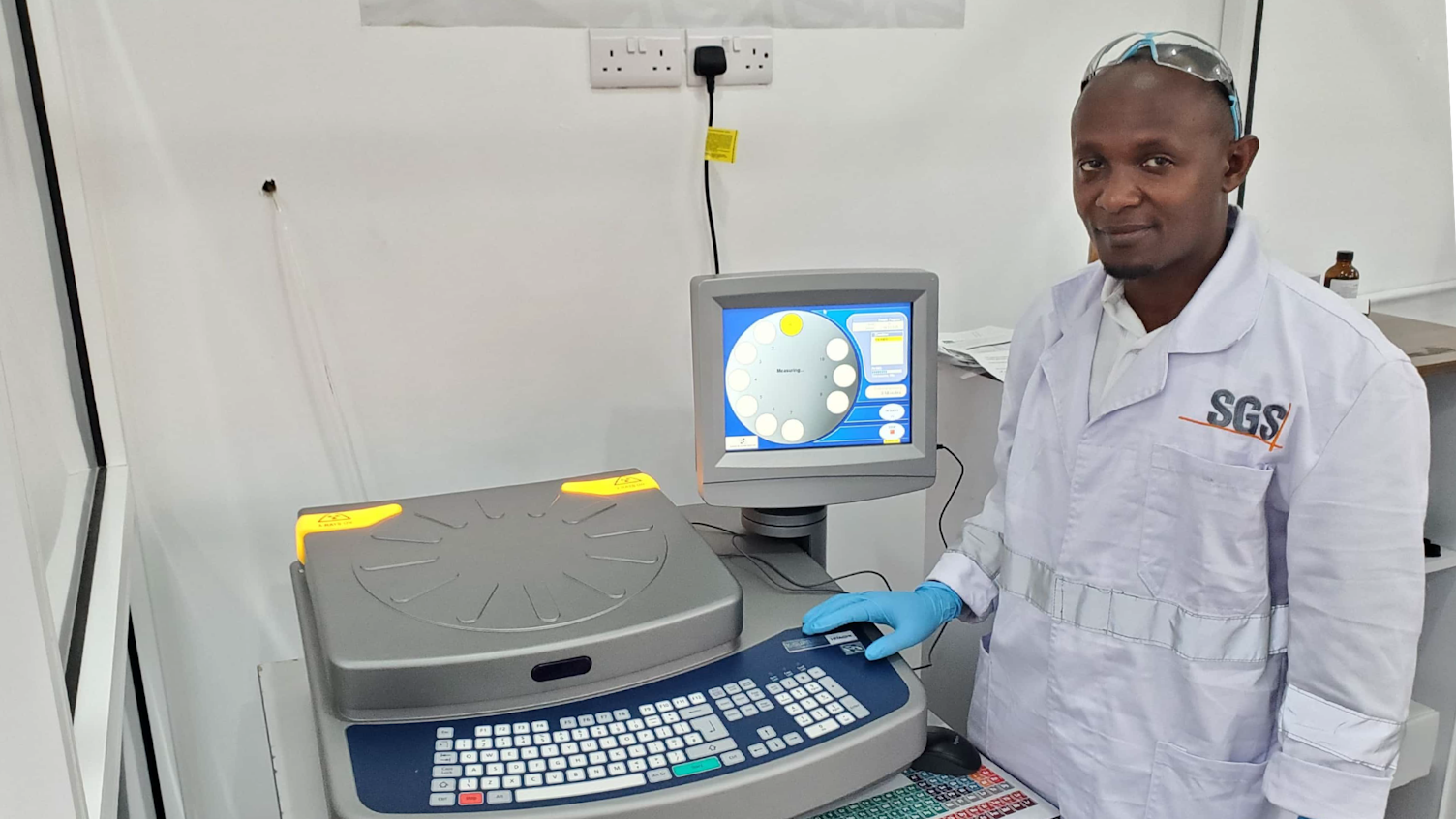
Using test methods ASTM D-5059 and ASTM D-4294, SGS is able to accurately analyze gasoline and other petroleum samples to ensure they meet regulatory standards.
Moreover, taken that liquid petroleum products are imported to Tanzania mainly through Dar es Salaam ports, the SGS lab location in Kurasini has been extremely functional.
SGS's XRF testing services offer a comprehensive solution to the challenge of ensuring compliance with Tanzania's petroleum regulations. By utilizing these services, oil distributors and retailers can not only meet regulatory standards but also build consumer trust and enhance the quality and safety of their petroleum products.
As the industry continues to evolve, SGS's XRF testing will remain a critical tool for companies looking to maintain compliance and stand out in the competitive Tanzanian petroleum market.
Our XRF testing services in Tanzania provide a reliable solution for companies in the petroleum industry looking to meet regulatory requirements and maintain high standards of quality.

About SGS
SGS is the world’s leading Testing, Inspection and Certification company. We operate a network of over 2,500 laboratories and business facilities across 115 countries, supported by a team of 99,500 dedicated professionals. With over 145 years of service excellence, we combine the precision and accuracy that define Swiss companies to help organizations achieve the highest standards of quality, compliance and sustainability.
Our brand promise – when you need to be sure – underscores our commitment to trust, integrity and reliability, enabling businesses to thrive with confidence. We proudly deliver our expert services through the SGS name and trusted specialized brands, including Brightsight, Bluesign, Maine Pointe and Nutrasource.
SGS is publicly traded on the SIX Swiss Exchange under the ticker symbol SGSN (ISIN CH1256740924, Reuters SGSN.S, Bloomberg SGSN:SW).