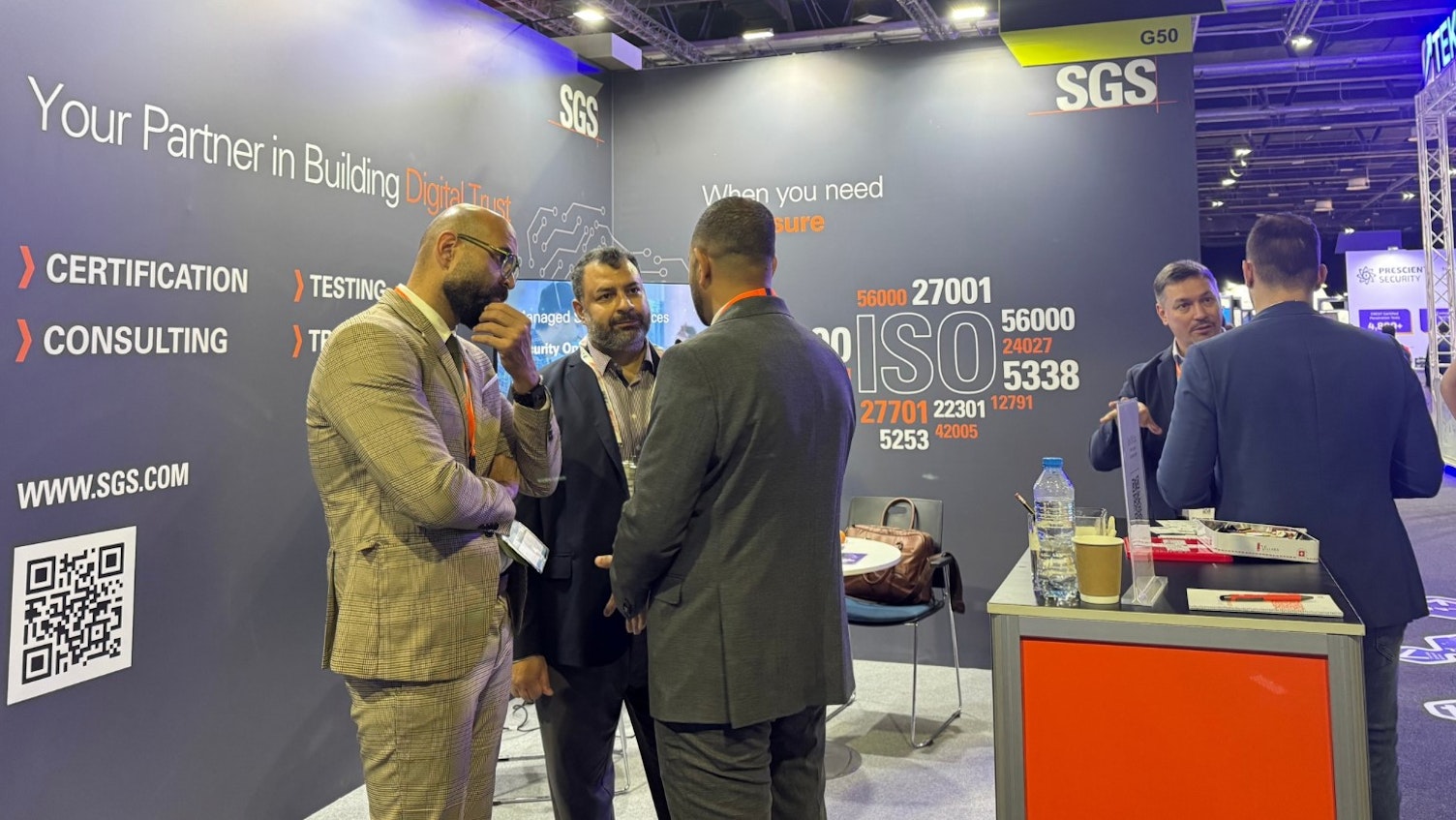
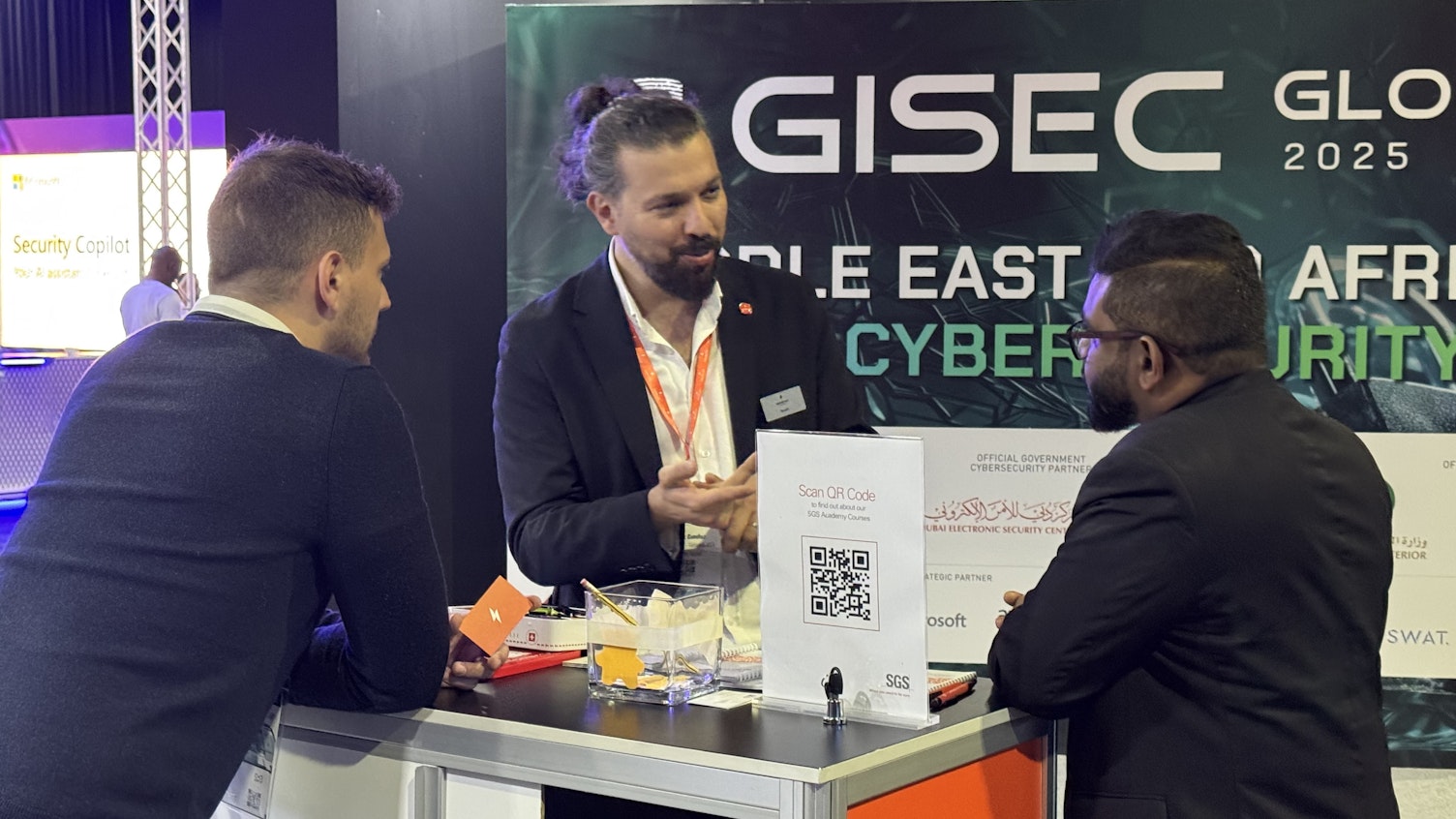
From May 6 to 8, 2025, cybersecurity leaders, innovators, and decision-makers converged at GISEC in Dubai to examine the rapidly evolving cyber landscape. SGS was among the participants, with our team of Digital Trust experts present at the SGS booth throughout the three days.
We engaged in a wide range of discussions with government representatives, private sector leaders, startups, and academic institutions to better understand their cybersecurity challenges and share our experience in certification, training, testing and consulting.
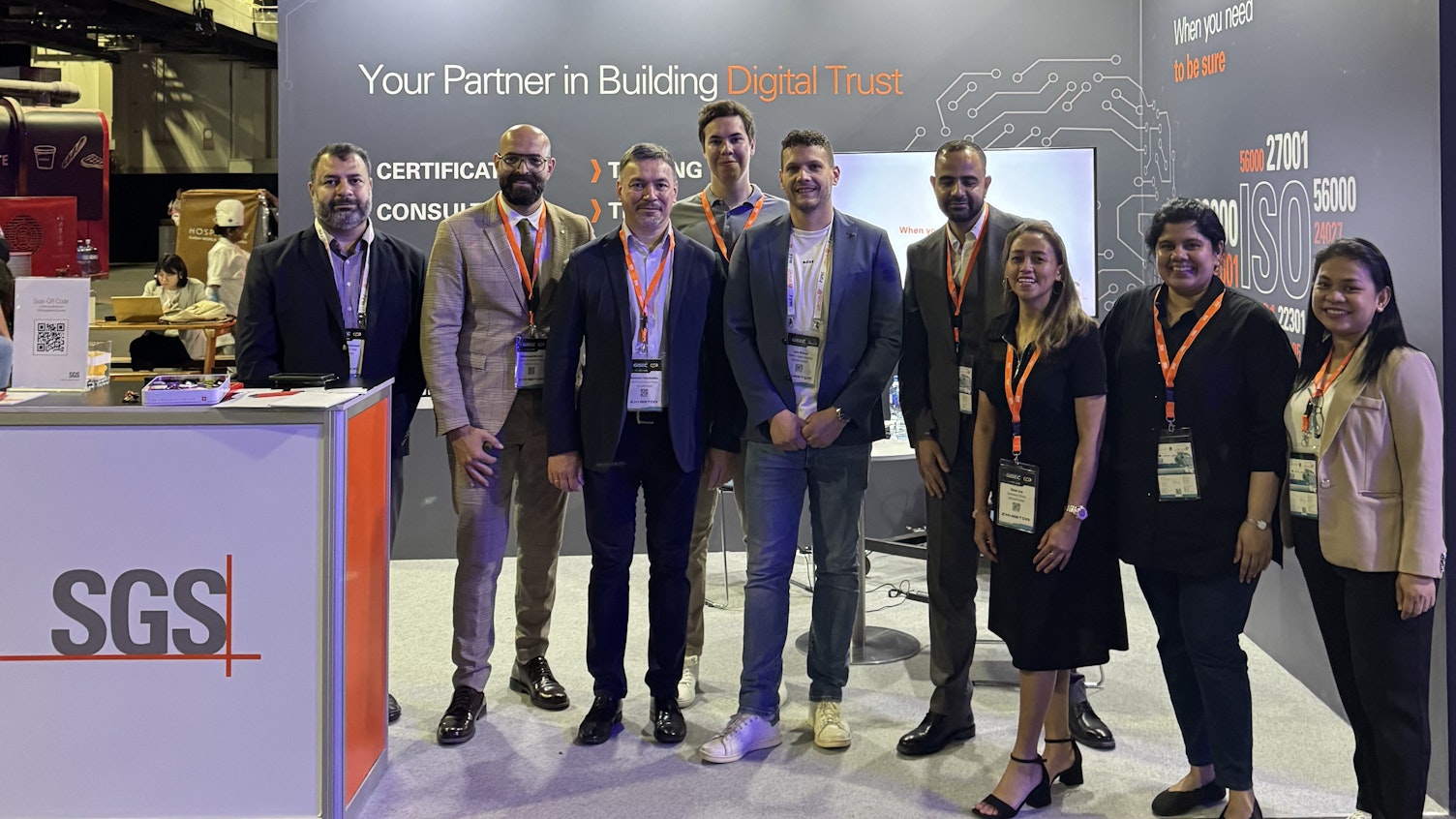
While the event was a key touchpoint, what matters most are the insights it revealed about the state of cybersecurity in the Middle East. In this article, we explore key industry-wide trends and developments that signal where the region is heading.
1. Public sector cybersecurity: The UAE sets the pace
The UAE government is among the leading nations in the region driving digital transformation and cybersecurity governance. Entities such as the Dubai Electronic Security Center (DESC) are not only investing in cutting-edge infrastructure but are also nurturing local cyber talent and promoting resilience within public institutions. Recent initiatives like partnerships with cloud service providers and cyber skills competitions for students reflect a deep national commitment to information security.
This leadership is shaping a regulatory environment where cybersecurity is no longer optional but essential across all sectors.
2. Artificial intelligence in cybersecurity: Promise & peril
AI is playing an increasingly central role in shaping cybersecurity solutions. At the event, discussions focused on its capacity to enhance threat detection, automate responses, and identify behavioral anomalies in real-time. Examples included AI-driven security operation centers (SOCs) that use machine learning to anticipate attacks, and intelligent firewalls that adapt dynamically to new threats.
Yet, the dual-use nature of AI was also a concern. Experts warned of the risks posed by unregulated AI agents, deepfake-based phishing schemes, and synthetic attacks that mimic legitimate user behavior. These threats are pushing organizations to rethink their AI deployment strategies.
A growing consensus is forming around the need for standardized frameworks that govern the ethical and secure use of AI in cybersecurity. Emerging standards like ISO/IEC 42001 (AI Management Systems) are gaining traction as businesses seek structured approaches to manage AI risks while promoting transparency, accountability, and compliance.
The challenge ahead is to strike a balance between innovation and responsibility, a theme that resonates strongly across industries exploring AI integration
3. Cyber talent & academic partnerships: A growing imperative
One of the most encouraging signals from the industry was the increasing involvement of academic institutions in cybersecurity development. At GISEC 2025, more than 300 students participated in cybersecurity competitions and learning sessions, while several universities, including Middlesex University Dubai, Khalifa University, and international education hubs, showcased their research and innovations in cyber risk and data protection. Entities such as the Dubai Electronic Security Center also hosted school-level awareness programs and coding challenges.
This growing synergy between academia and industry points to a vibrant talent pipeline in the region. With cybersecurity skills in high demand, education providers are stepping up to fill the gap through research programs, hands-on training, and industry-recognized certifications.
In parallel, the evolving digital landscape also calls for educational institutions and training centers to consider implementing standards like ISO 56002 (Innovation Management Systems) and ISO/IEC 27001 (Information Security Management). These frameworks not only strengthen internal controls but also align academic programs with industry needs, ensuring that future professionals are equipped with the right skills, mindset, and governance principles.
This ecosystem of learning, certification, and mentorship is essential for sustainable digital development in the region.
4. Startups and SMEs: Catalysts for innovation
The Middle East is witnessing a surge in cybersecurity-focused startups and small enterprises. According to recent reports from GISEC 2025, over 250 cybersecurity startups exhibited at the event, with more than 150 investors exploring partnerships across emerging markets. These agile innovators are addressing niche challenges with flexible, scalable solutions from endpoint protection and SOC-as-a-service to compliance automation and threat intelligence tailored to local business needs.
This trend reflects the increasing digital maturity of small and medium-sized enterprises in the region. However, while the innovation is evident, many of these businesses lack the internal capacity to build and maintain resilient cybersecurity infrastructures.
To remain competitive and secure, startups and SMEs must invest in continuous staff training, especially in areas like risk assessment, incident response, and compliance awareness. Leveraging internationally recognized frameworks such as ISO 9001 (Quality Management) and ISO/IEC 27001 (Information Security Management) can help them implement consistent internal practices and gain the trust of clients and regulators.
Training programs like those offered through SGS Academy are instrumental in building foundational knowledge and operational readiness among employees. Whether through beginner-level cybersecurity awareness or advanced audit and compliance courses, structured learning can empower teams to manage threats proactively and align with best practices.
What these businesses need now is a supportive ecosystem: simplified regulatory pathways, accessible certification options, and tailored training that aligns with their operational scale and strategic goals.
5. Collaboration over competition: The rise of cyber alliances
Cybersecurity has become a shared responsibility. Multi-sector alliances, government-industry dialogues, and public-private partnerships are emerging as critical enablers of national and regional cyber resilience. Initiatives like the Dubai Cyber Challenge showcase how collaboration can spark innovation and improve preparedness.
Looking ahead, the strength of the region’s cybersecurity will depend not only on individual investments but on the ability of diverse stakeholders to work together toward common goals.
6. Operational technology (OT) security: The industrial frontier
As digital transformation accelerates across sectors like energy, utilities, manufacturing, medical devices and transport, Operational Technology (OT) systems are increasingly becoming a target for cyber threats. Unlike traditional IT systems, OT environments control physical processes, making disruptions potentially catastrophic in terms of safety, production, and service delivery.
At GISEC 2025, several discussions centered on the convergence of IT and OT networks, and the urgent need to secure legacy systems that were never designed with cybersecurity in mind. Threat actors targeting critical infrastructure are using advanced tactics, making it vital for organizations to assess their OT risk exposure and implement sector-specific protections.
A key takeaway is the growing demand for specialized cybersecurity training and incident response planning tailored to OT professionals. Standards such as IEC 62443 (Industrial Automation and Control Systems Security) and ISO 27019 (for the energy sector) are increasingly being referenced as frameworks for industrial cybersecurity.
Through structured assessments, training programs, and collaborative efforts between IT and engineering teams, organizations can build more resilient OT environments. SGS continues to support critical industries in addressing these emerging challenges with practical solutions grounded in international standards.
Final thought
Cybersecurity in the Middle East is no longer a future ambition; it's a present-day imperative. From AI governance and academic partnerships to SME inclusion and government leadership, the region is actively shaping a secure digital ecosystem.
SGS remains committed to contributing to this journey by offering services and insights that support safer, more resilient digital infrastructure. To explore our cybersecurity capabilities, get in touch with our digital trust experts.
Stay informed. Subscribe now.
For exclusive insights on management systems, ISO standards and sustainable business growth, subscribe to our monthly email newsletter.

About SGS
SGS is the world’s leading Testing, Inspection and Certification company. We operate a network of over 2,500 laboratories and business facilities across 115 countries, supported by a team of 99,500 dedicated professionals. With over 145 years of service excellence, we combine the precision and accuracy that define Swiss companies to help organizations achieve the highest standards of quality, compliance and sustainability.
Our brand promise – when you need to be sure – underscores our commitment to trust, integrity and reliability, enabling businesses to thrive with confidence. We proudly deliver our expert services through the SGS name and trusted specialized brands, including Brightsight, Bluesign, Maine Pointe and Nutrasource.
SGS is publicly traded on the SIX Swiss Exchange under the ticker symbol SGSN (ISIN CH1256740924, Reuters SGSN.S, Bloomberg SGSN:SW).


Floor No.1, Building No.340 Street 230, Zone 24,C Ring Road,
24140,
Doha, Qatar