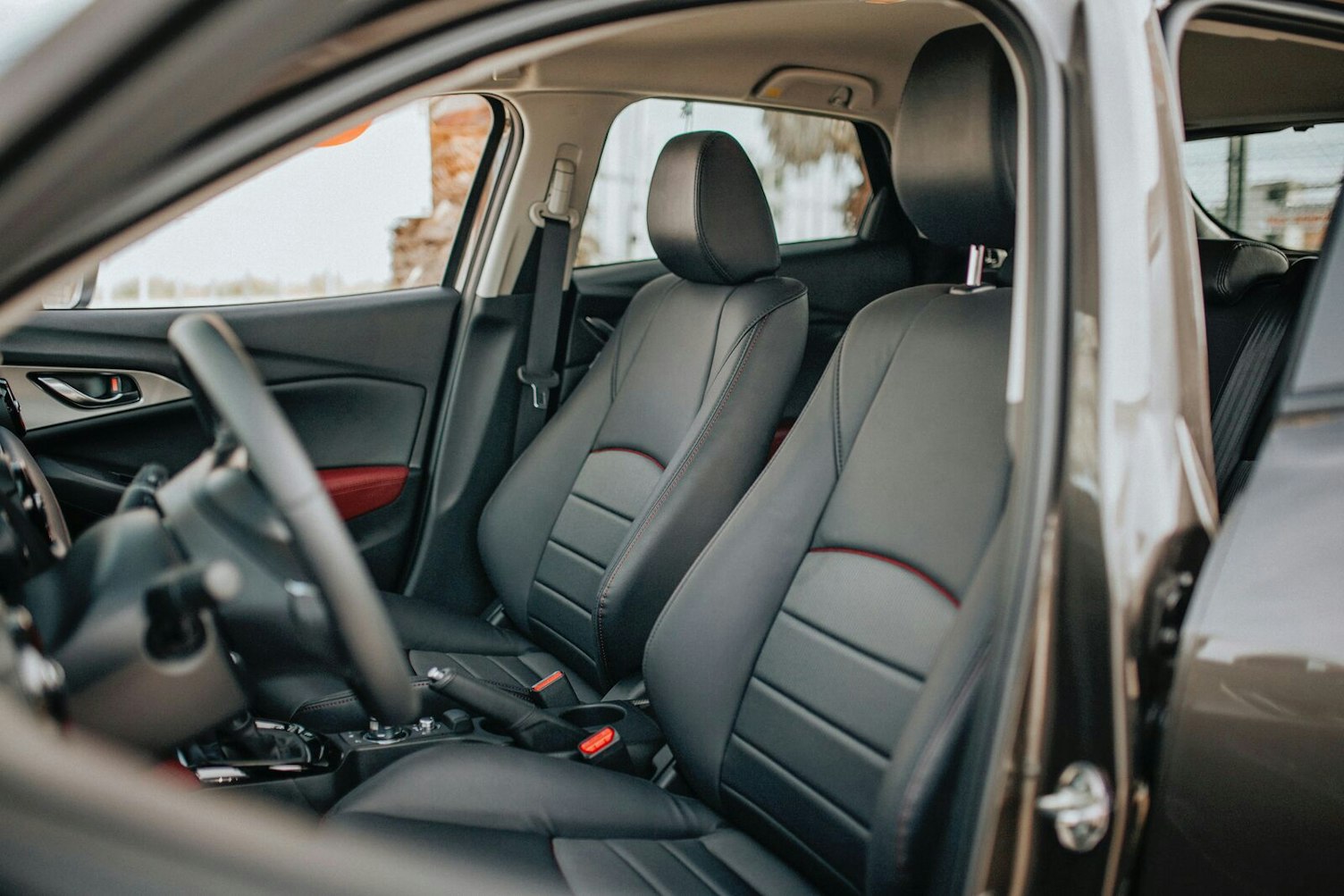
Vehicle interior air quality is critical for car manufacturers and occupants. Changes in temperature can cause trim materials such as plastics, polymers, foams and textiles to release substances that may affect the health and safety of drivers and passengers. As a result, vehicles must meet various ISO and original equipment manufacturer (OEM) standards and regulations.
Our interior emissions tests can be carried out on materials, parts and whole vehicles. We offer testing for:
- Volatile organic compounds (VOC) and semi-volatile organic compounds (SVOC)
- Formaldehyde and other carbonyl compounds
- Fogging
- Odor/smell
- Filtration
VOC and SVOC testing
VOC and SVOC can have a direct effect on the health and safety of drivers and passengers. As a result, strict regulations and standards have been set to qualify and quantify their presence in materials, parts or in the vehicle itself.
Our test chambers range in size from micro to one that is large enough to fit an entire vehicle plus preparation room. This capacity means we can test all makes, models, materials and parts against different standards and specifications.
We offer analysis of formaldehyde and other carbonyl compounds, residual monomers, nitrosamines and total organic carbon.
Fogging tests
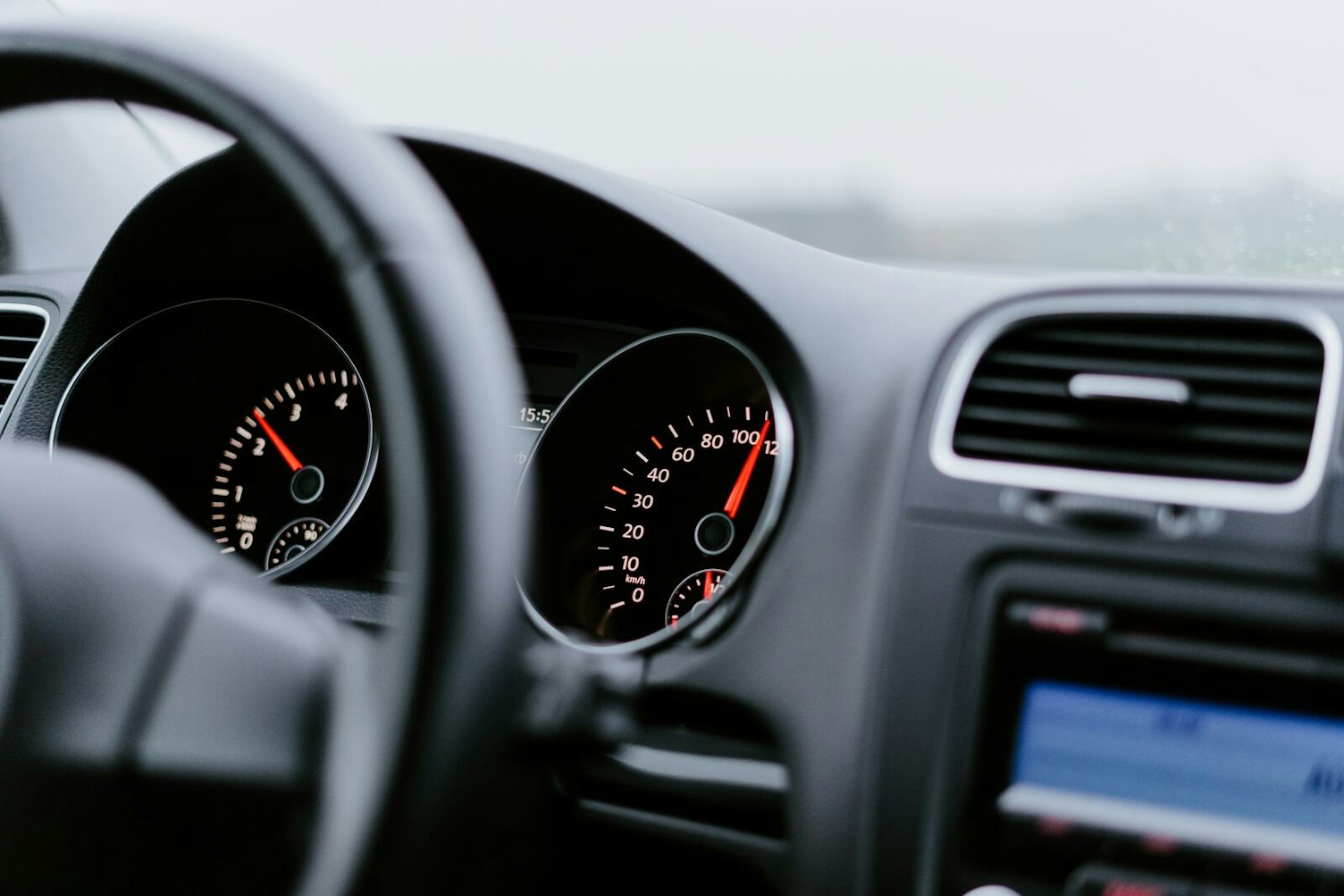
Fogging tests determine the quantity of volatile products released by materials in the passenger compartment under high temperature. The ‘fogging’ is the condensation on the inside of the windscreen. The test includes:
- Gloss measurement of the condensation
- Weighing of the condensate
- Transparency measurement (or haze) of the fogging
Odor/smell tests
This sensory assessment is carried out by a trained qualified tester and covers two areas:
- Odor intensity
- Odor identification
These assessments can be carried out on materials or parts, using jars or bags.
All interior emissions tests are conducted in accordance with ISO and OEM standards.
| OEMS | VOC /Formaldehyde | Odor | Fogging |
| GM | TS-BD-003, GMW8081, GMW 15600, GMW15634, GMW15635 , GMW 14236 | GM9130P, GMW3205 | GMW 3235 |
| Ford | FLTM BZ 157-01, BZ108-01, BZ 156-01 | 16-0064, BO131-01&03 | SAEJ1756 |
| Renault | RNES-B-00114, RNES-B-20116 | RNES-B-00096 | RNES-B-00070 |
| Stellantis | D105495, D405535, CS-13398 | CS-A0806 | D451727, LP-463DB-12-01, LP-463KC-09-01, CS-A0228 |
| BMW | GS97014-2, GS97014-3, GS97014-4, VDA278 | VDA270 | DIN75201 |
| Mercedes Benz | VDA276, VDA277 & VDA278 | VDA270, DBL5430 | DIN75201 |
| VW Porsche | VW 50180, PV3341, PV3942, PV 3938, PPV 8042/VW 96424, PV 3925 PN780 | PV3900 | PV3015, PV3920 |
| Jaguar Land Rover | TPJLR 52.104 | TPJLR 52.458 | |
| Hyundai / Kia | MS300-57, MS 300-55 | MS300-34 | MS300-54 |
| Toyota | TSM 0508G, TSM0512 | TSM0505G | TSM 0503G |
| Nissan | M0402 | M0160 | M0161 |
| Mazda | MESCF080 & MES CF090 | MESCF055&56 | |
| Honda | 0094Z-T7S-0001 | HESD6508 | |
| Suzuki | SESN2403 | SESN2404&2405 | |
| Mitsubishi | ESW83252 | ||
| Volvo Geely | VCS1027,2769, VCS1027,2759, VCS1027,2749, VCSVCS 1027, 2739 VCS1027,2714, STD 429-0003 Q/JLY J7110274B | VCS1027,2729 STD1027,2712 | VCS1027,2719 |
| Faw | Q/CAM-502.1&Q/CAM-502.2 | ||
| Dongfeng | EQCL 4008 | ||
| Changan | VS-01.00-T-14016-A6 | ||
| GAC | QJ/GAC 1550.002 | ||
| GWM | Q/CC SY248 |
Filtration performance
We provide advanced determination of fuel, oil and air filters for internal combustion and electric vehicles, including:
- Particulate removal and micron ratings (ISO 11155)
- Water emulsion removal from fuels
- Cabin air particulate and odor removal
- Dust and water capacities
- Paint shop filtration including HVAC and paint wetting impairment substance (PWIS) detection
Cleanliness of components
The cleanliness of automotive fluid components is essential if the system is to be reliable and durable. We offer cleanliness tests according to ISO 16232 to ensure component parts for air circuits, coolants, fuel and oil are safe and comply with all necessary standards. The tests involve extraction by shaking or rinsing, after which impurities are filtered out and analyzed to determine the particle count, size and nature.
Please ask for the full list of international and OEM standards we test against.
