When we sit down to eat, we rarely question whether the plate, cup, or container may contain toxic elements and chemical additives that migrate into food, posing direct threats to human health. In the European Commission's 2025 Annual Report on the Alert & Cooperation Network (ACN), it reveals that food contact materials (FCM) are triggering major safety alarms, with 250 notifications, representing 2.8% of all ACN notifications. Among these, 68.8% involved possible health risks and 8% related to potential fraud.
According to recent administrative control notifications, FCM compliance issues account for a notable share of safety alerts, with nearly 69% of these cases involving possible health risks and 8% tied to potential fraud.
These findings indicate that kitchenware and tableware remain the primary sources of FCM-related notifications, accounting for more than half of all reported cases.
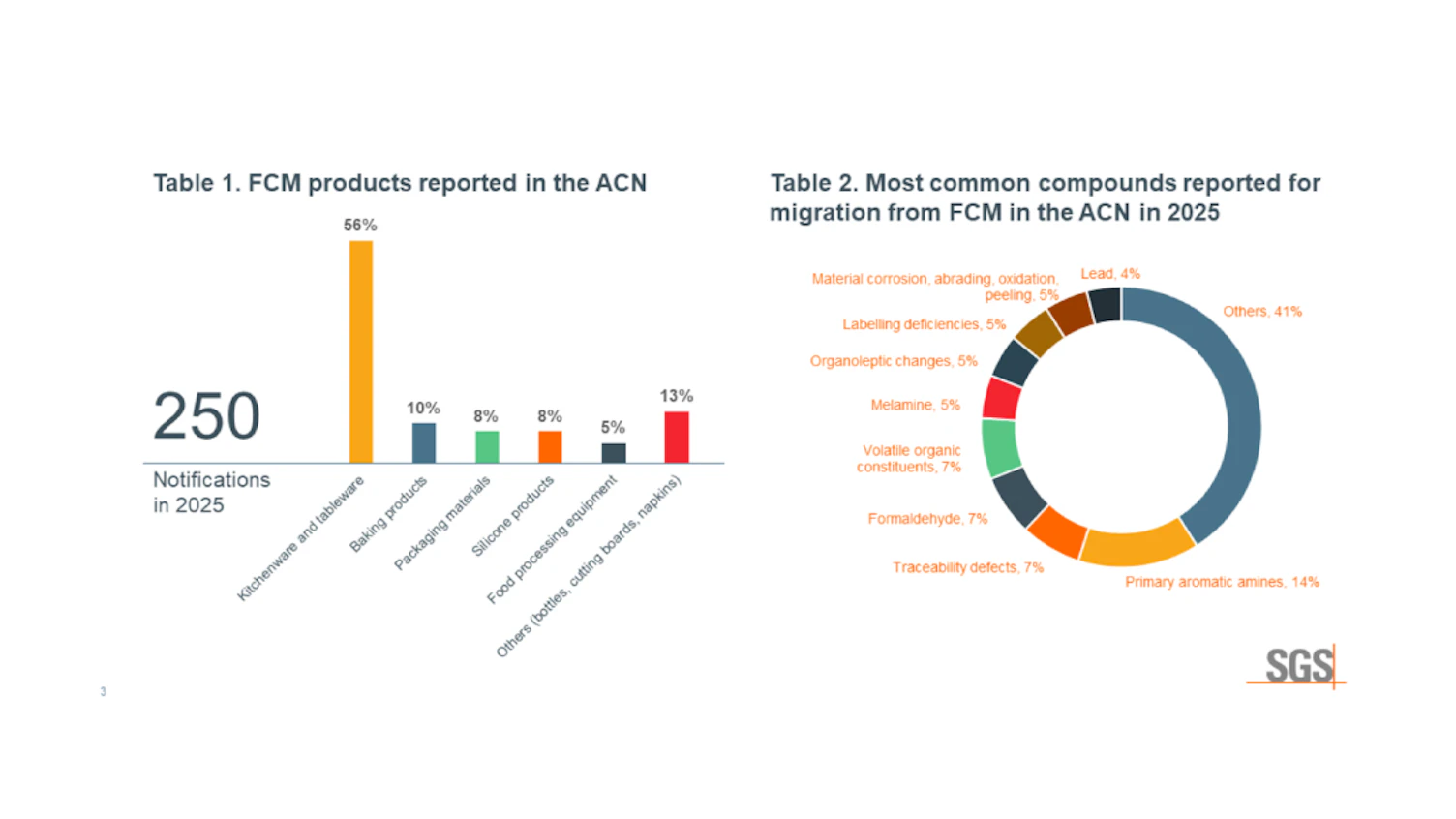
Moreover, more than half of these violations stem from migration hazards—meaning chemical substances are bleeding out of the material and directly into food. Heavy metals like lead, cadmium, and arsenic are potent neurotoxins and organ disruptors, capable of accumulating in the human body over time to cause chronic neurological, developmental, and renal damage.
Meanwhile, substances like primary aromatic amines and formaldehyde are recognized or suspected carcinogens.
From an environmental perspective, poor material durability and unauthorized ingredients—such as unapproved bamboo blends or persistent chemicals like PFAS—worsen ecological pollution. When substandard products degrade or fail safety checks, they lead to massive product recalls, widespread destruction, and unnecessary landfill waste, undermining global shifts toward a circular economy.
Electrical vs. Non-Electrical Products: A Complex Regulatory Split
When mapping out compliance, the distinction between non-electrical items (like traditional ceramic mugs or silicone spatulas) and electrical kitchen appliances (like blenders, coffee makers, or food processors) introduces a major regulatory twist. While both must comply with strict food contact standards to prevent chemical migration into food, electrical appliances face a dual-compliance burden. Beyond proving that internal plastic components, blades, or protective coatings meet migration limits and positive list requirements, manufacturers must simultaneously satisfy electrical safety, electromagnetic compatibility (EMC), and machinery directives.
Securing Compliance with SGS FCM Services
With regulators increasing scrutiny and consumers demanding transparency, SGS can help manufacturers ensure product safety through our comprehensive solutions that address such risks, such as:
- Advanced Chemical Testing: Analysis of food contact materials from packaging, household goods, and the raw materials for aromatics, heavy metals, bisphenols, and other hazardous substances.
- EU FCM Regulatory Compliance: From (EU) 1935/2004 and (EU) 10/2011 to (EU) 2024/3190, SGS guides manufacturers through complex requirements to ensure safe market access.
SGS can ensure your products meet the appropriate territorial regulations for food contact materials and help pave the way for compliance.
Want to learn more about our FCM services? Please contact our experts!
- For Electronic Products
- For Non-Electronic Products
To obtain a copy in PDF version, please click here.
About SGS
SGS is the world’s leading Testing, Inspection and Certification company. We operate a network of over 2,500 laboratories and business facilities across 115 countries, supported by a team of over 100,000 dedicated professionals. With more than 145 years of service excellence, we combine the precision and accuracy that define Swiss companies to help organizations achieve the highest standards of quality, compliance and sustainability.
Our brand promise – when you need to be sure – underscores our commitment to trust, integrity and reliability, enabling businesses to thrive with confidence. We proudly deliver our expert services through the SGS name and a portfolio of trusted specialized brands, including Applied Technical Services, Brightsight, Bluesign and Nutrasource.
SGS is publicly traded on the SIX Swiss Exchange under the ticker symbol SGSN (ISIN CH1256740924, Reuters SGSN.S, Bloomberg SGSN SW).




Units 303 & 305, 3/F, Building 22E,
Phase 3, Hong Kong Science Park,
Pak Shek Kok, New Territories, Hong Kong, China