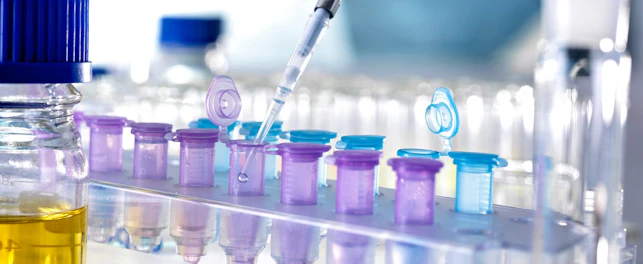
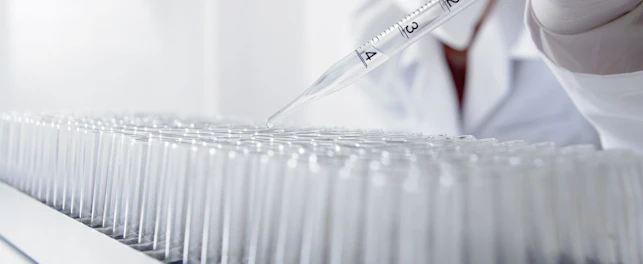
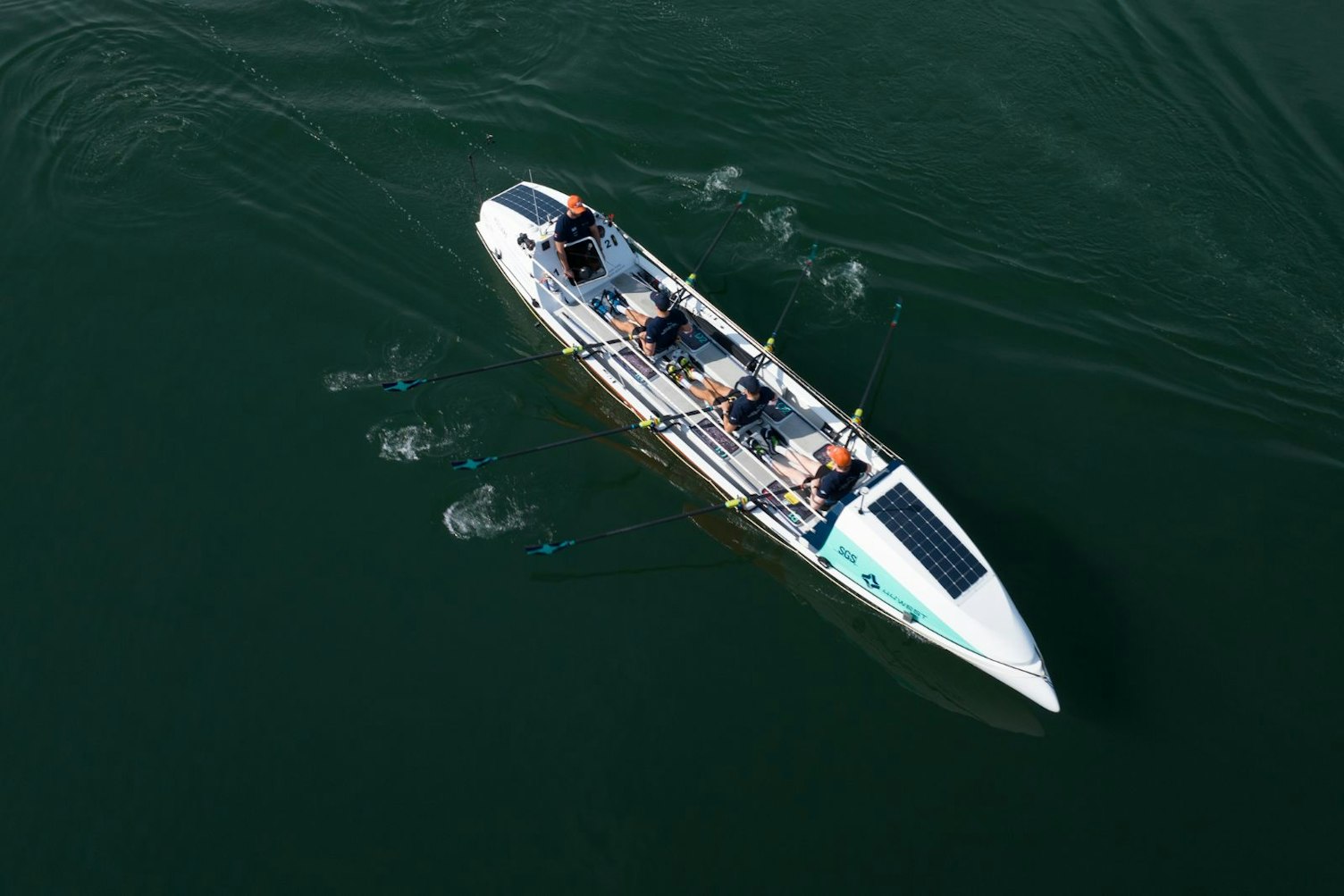
As the 44west team prepared to join the World’s Toughest Row – Atlantic, sponsor SGS applied its product testing expertise to assess the performance and resilience of the solar panels that will be critical for powering communications, navigation and onboard systems during the journey.
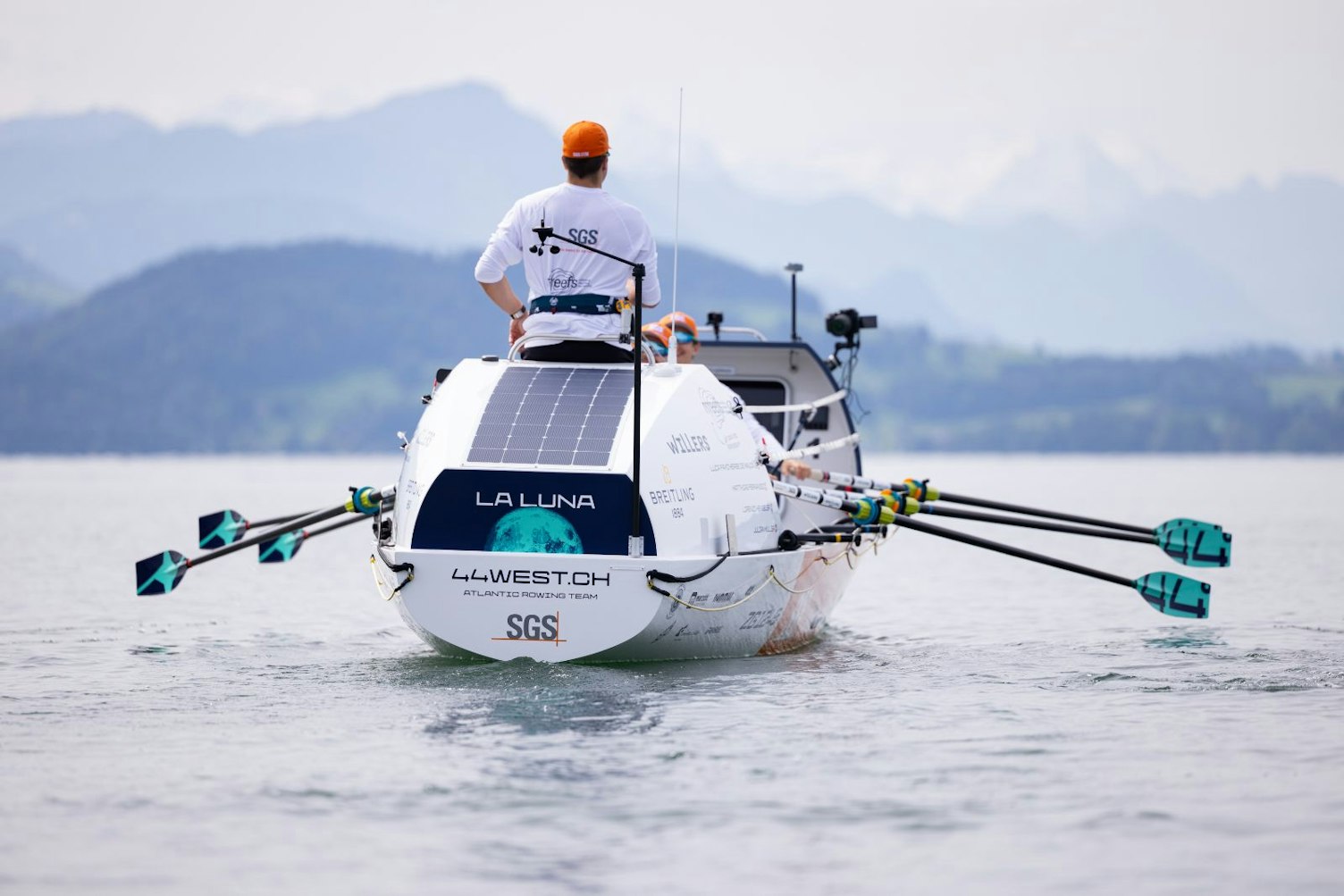
Solar panels are a lifeline for the 44west team. Once at sea there is no backup power source. Even small panel failures could lead to loss of energy, communications or navigation support in a challenging marine environment. Testing helps detect issues early, confirm performance expectations and minimize risks associated with saltwater corrosion, humidity, extreme temperatures and mechanical stress at sea.
Which tests were performed?
The marine environment is one of the most rigorous tests for photovoltaic equipment, and its challenges are comprehensive and continuous: high salt spray corrosion, high humidity, temperature extremes, strong winds, mechanical impacts, and UV exposure.
To ensure the panels were fit for purpose, we carried out a range of tests covering safety, performance and environmental resilience, including:
- Visual inspection
What: check for defects such as cracks, scratches, bubbles, delamination of backplate, and sealing of junction boxes
Why: the ocean is highly humid and salty, and any small defect can become a starting point for corrosion and leakage
- Insulation resistance
What: measure the resistance between the panel’s internal circuit and its metal frame
Why: to ensure there is no risk of electric shock due to insulation failure
- Wet leakage current testing
What: soak the panel in conductive saltwater, apply high voltage to it, and measure the current leaking from the internal circuit to the outside through water
Why: simulate the worst wet leakage scenarios in the ocean to ensure that even if completely soaked in seawater, there will be no dangerous electrical leakage or sharp performance reduction
- Standard Test Conditions (STC) performance measurement
What: measure key electrical performance parameters such as maximum output power and efficiency of solar panel under standard testing conditions
Why: in the open sea, every watt of electricity is extremely valuable, and failure to meet performance standards can directly lead to an energy crisis, endangering navigation and communication
- Salt mist corrosion testing
What: simulation of a high salt spray environment to verify the corrosion resistance of components such as frames and junction boxes
Why: to prevent failures caused by corrosion
These tests, carried out at our laboratories in China, replicated the harsh conditions expected during the 44west team’s Atlantic crossing and help verify that the panels can withstand them reliably.
What the test results show
Our test program confirmed that the solar panels provide:
Extremely high environmental tolerance: able to resist the combined erosion of high salt spray, high humidity and strong ultraviolet radiation, ensuring stable performance under long-term exposure
Excellent structural reliability: their mechanical structure can withstand strong winds, huge waves and continuous vibrations, maintaining structural integrity in harsh sea conditions
Absolute safety guarantee: the electrical design ensures that there is no risk of electrical leakage even in the event of splashing waves or extreme humidity, ensuring the safety of personnel and equipment
Stable energy output: not only efficient under standard conditions, but they are also able to provide reliable power under real ocean conditions such as low light and temperature changes
Together, these results confirm that the panels are intact and robust (visual inspection), electrically safe (insulation and moisture) in wet conditions, and able to consistently deliver the expected power (output STC performance), ensuring they are ready to support the 44west expedition in extreme marine environments.
The marine environment is one of the most rigorous tests for photovoltaic equipment, combining salt spray, high humidity, mechanical stress and intense UV exposure over long periods of time.
Supporting sustainable energy beyond the expedition
While the testing program supports the immediate needs of the 44west team, it also reflects a broader commitment to sustainability. Ensuring the quality and durability of solar panels helps extend product lifespan, reduce failure rates and lower the overall cost of clean energy systems.
By validating performance under extreme conditions, testing builds confidence in solar technology, supports long-term investment and accelerates the transition away from fossil fuels. The insights gained also feed into improved product design, material selection and international standards, helping solar energy perform reliably across diverse environments — from open oceans to large-scale power plants worldwide.
Together, these efforts help accelerate the global transition to reliable, low-carbon energy solutions – far beyond a single expedition.
How can SGS meet your solar panel testing needs?
Beyond this project, we test panels for potential use in all conditions – temperate climates, deserts and arid environments, extremes of heat and cold. Our comprehensive solar panel testing services for manufacturers, developers and operators around the world, include:
- Environmental and marine durability testing
- Performance benchmarking and degradation analysis
- Corrosion and ingress protection assessments
- Mechanical load and impact resistance verification
- Failure analysis and advanced diagnostics
- Certification support and life cycle assurance
These services help clients improve product quality, enhance reliability and support market entry with confidence.