Absorbent hygiene product testing services evaluate the safety, performance, quality and compliance of products designed for personal hygiene. SGS assesses items such as diapers, feminine hygiene products, adult incontinence products and wipes to ensure they meet regulatory requirements, perform as intended and are safe for prolonged skin contact.
Consumers and regulators expect absorbent hygiene products to meet high standards for performance, safety and sustainability across the full product lifecycle. SGS provides comprehensive solutions to help you meet your goals for absorption performance, grip and comfort, skin tolerance, efficacy, biocompatibility and sustainability. We support claim substantiation to build consumer trust in a highly sensitive product category.
Our services cover:
- Baby hygiene products – diapers, training pants, underpads, reusable nappies
- Adult incontinence products – briefs, pants, pads bed mats
- Feminine hygiene products – pads, tampons, period underwear, reusable products
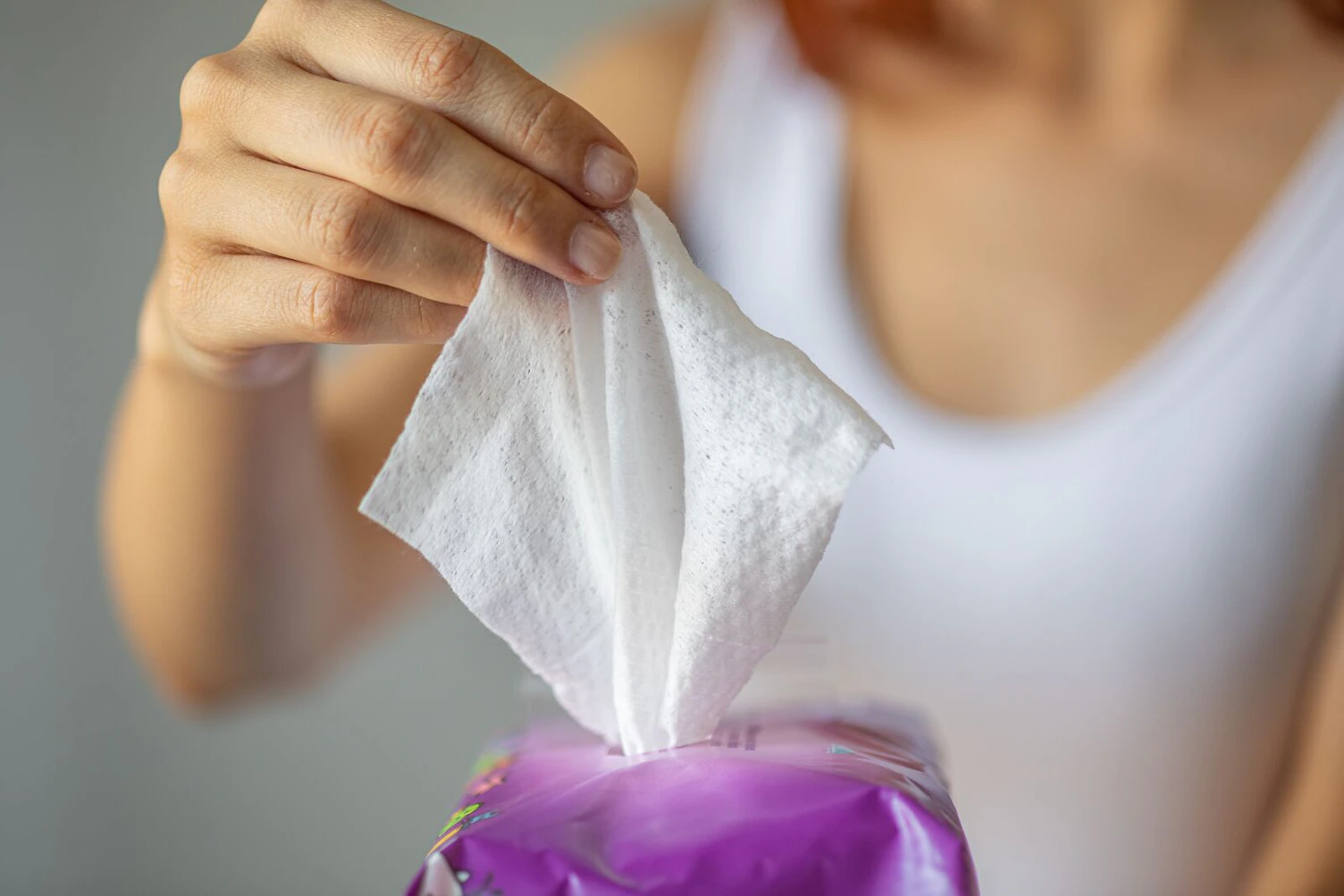
- Wipes – baby, cosmetic, disinfecting, full‑service
- Tissue paper hygiene products – toilet paper, facial tissues, napkins, paper towels
- Cotton products – pads, swabs, balls, cosmetic cotton
Stand out in the absorbent hygiene products market
- Meet consumer and regulatory demandsEnsure your products are safe, effective, comfortable and reliable.
- Protect brand reputation and increase consumer trustSubstantiate marketing claims and demonstrate transparency.
- Identify defects earlyReduce the risk of product recalls, fines and negative reviews.
- Reduce environmental impactEnsure the sustainability of your products and packaging.
Our absorbent hygiene products solutions
- Performance and functional evaluationsWe evaluate absorption capacity, leakage control, speed of liquid absorption and distribution, rewet and skin wetness, breathability and softness, closure and fastening system performance, and structural integrity during use.
- Skin contact testingWe assess raw materials and finished products for skin compatibility, irritation and sensitization potential, microbiological quality and hygiene, integrating toxicological expertise to interpret safety data and support risk-based decision making.
- Testing for trace chemicalsWe provide intrinsic material screening for trace chemicals, such as PFAS, allergens, formaldehyde and heavy metals, to support regulatory monitoring. We conduct use-related exposure assessments to allow you to demonstrate transparency in product composition. We also help define the appropriate extraction method based on the product material, real life conditions, target analytes and limits of quantification.
- Sustainability assessmentsWe help you meet consumer and regulatory demands for sustainable products by evaluating the biodegradability and compostability of materials and ingredients, packaging compatibility and migration, and compliance with environmental safety regulations.
Why choose SGS?
As a leading provider of testing services for the cosmetics and personal care sector, we offer a global network of accredited laboratories that use harmonized methods. We have extensive experience in trace chemical analysis and safety evaluations.
Our end-to-end support, from R&D to market, includes performance benchmarking, claim substantiation, quality control and ongoing monitoring and regulatory and compliance guidance.
FAQs
Testing is important because absorbent hygiene products are used directly on the skin and must be safe, effective and reliable. Independent testing helps identify defects early, verify product performance, support regulatory compliance, substantiate claims and reduce the risk of recalls or consumer complaints.
Testing supports regulatory compliance by generating reliable data that demonstrates product safety and performance. This data helps manufacturers meet applicable regulatory requirements, prepare technical documentation, address authority inquiries and ensure products can be placed on the market with confidence.
Independent testing provides objective evidence to support marketing and performance claims. Verified data helps ensure claims related to absorption, comfort, safety and sustainability are accurate, reducing the risk of misleading consumers.
Performance testing measures how well absorbent hygiene products function during use. SGS performs performance tests for:
- Absorption before leakage (ABL) – the diaper protects against leakage
- Anarewet skin hydration (ASH) – the AHP protects the skin from humidity at night
- Day test surface humidity (DTSH) – the AHP protects the skin from humidity at day
- Anarewet multiple strike through time – the AHP absorbs fast
- Closure system efficiency – the AHP stays in place and does not open
- Breathability backsheet wetness – the diaper allows skin to breathe while the external layer stays dry
- Softness DSA – analytical measurement of softness through an innovative test device, the digital softness analyzer
Yes, skin contact testing is essential for absorbent hygiene products because they are worn for extended periods. Testing by SGS evaluates skin compatibility, irritation and sensitization potential, as well as microbiological quality, helping ensure products are safe and suitable for direct and repeated skin contact.
Trace chemical testing identifies and assesses substances that may be present in raw materials or finished products at impurities level. SGS provides screening and exposure assessments under realistic use conditions to support regulatory monitoring and help demonstrate transparency in product composition.
SGS tests AHPs against ISO 10993, NWSP 360/CWA 18602 and ISO 10993.
ISO 10993 (Biological evaluation of medical devices) is the gold standard for assessing whether a medical device is compatible with the human body. It is considered the “safety bible” in the world of medtech.
NWSP 360/CWA 18062 specifies a method to identify and quantify trace chemicals potentially present in single-use absorbent hygiene products. It applies to single-use baby diapers, single-use menstrual products and single-use adult incontinence products. The results from this method are dependent on the prescribed extraction conditions, in which simulated body fluids are used exclusively.
ISO 12625 is a multi-part series of standards that covers all physical properties of tissue products such as facial tissues, paper towels, napkins and toilet paper.
The topsheet of an AHP is the internal side, which remains in contact with the skin. The backsheet is the external side of the AHP.
Av. De las Américas, Centro de Convenciones, empresarial 2 oficina 6,
090505,
Guayaquil, Ecuador