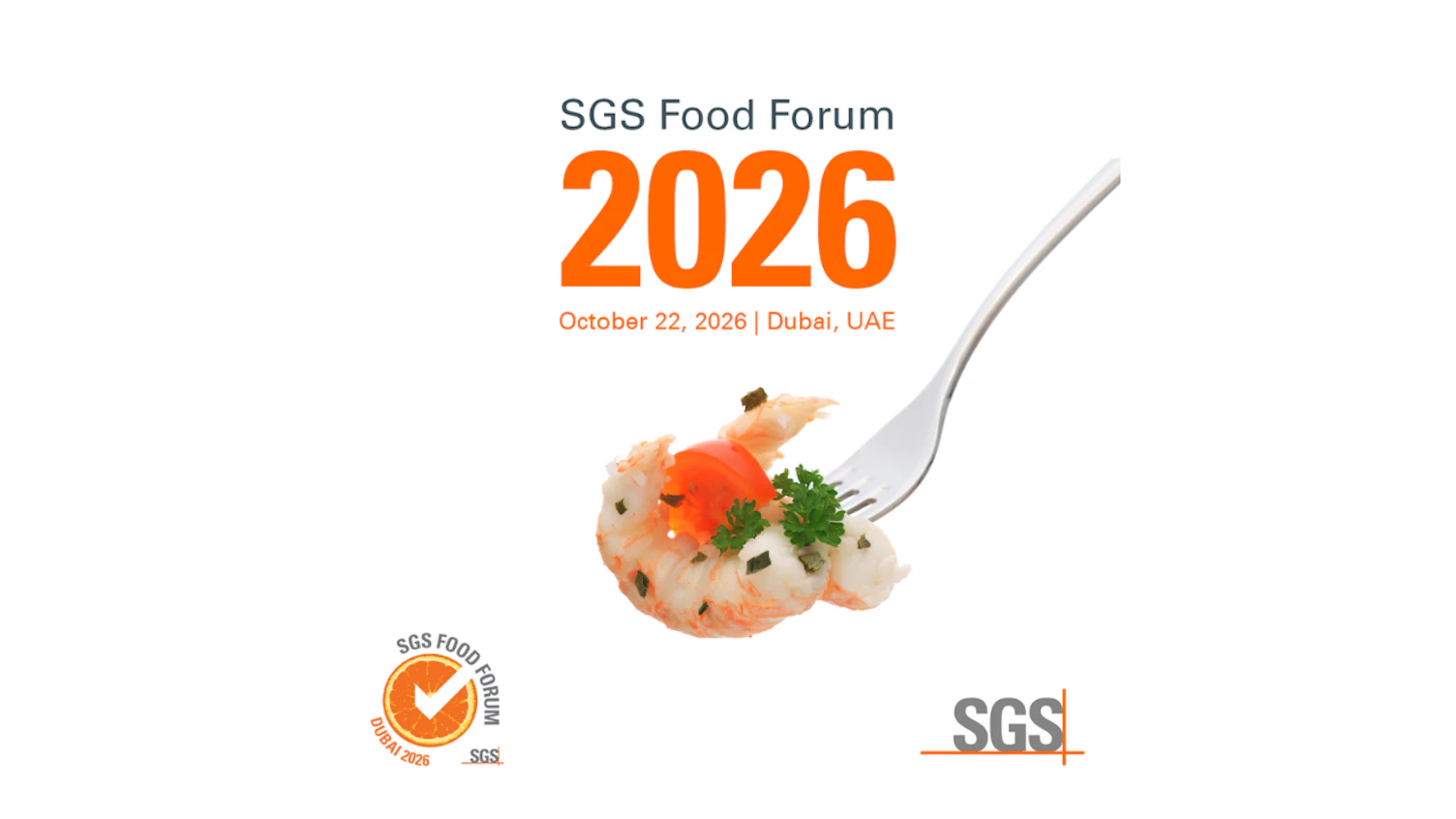
On October 22, 2026, we hosted the SGS Food Forum in Dubai, UAE. This full-day event brought together more than 140 industry professionals from across the food sector, including manufacturers, HoReCa operators, distributors and regulators.
The forum came at a time of real pressure on regional food supply chains, and the discussions reflected on it. Speakers moved from regulation and sustainability to emergency preparedness, environmental monitoring and artificial intelligence, with a consistent focus on what food businesses can act on now. In this article, we highlight the main takeaways from each session.
Session 1: Regulatory trends in food safety
The first session brought together Dubai Municipality and SGS experts to look at where food regulation is heading, from Dubai’s data-driven oversight to new EU contaminant limits and the UAE sugar tax. Together, the three talks showed how regulators and laboratories are moving from reacting to incidents toward anticipating risks, and what that means for the businesses they oversee. For food companies, the message was clear: compliance now means understanding the data behind the rules as well as the rules themselves.
What Will Shape Food Regulations in the Next 10 Years: The Dubai Perspective with Bobby Krishna
Bobby Krishna from Dubai Municipality opened with a reminder that regulations cannot stay rigid when supply chains, policies and risks change so quickly. He shared how the municipality kept food safe during recent disruptions, including working with service providers outside the food sector to protect stranded products. He then explained how import, registration and inspection data are used to anticipate risks, and how businesses can contribute to that picture through digital tools.

EU Food Safety Regulatory Update: New Limits for Chemical Contaminants with Michael Sawiris
Michael Sawiris from SGS walked the audience through the chemical contaminants drawing the most regulatory attention in Europe and explained why they matter even for businesses that do not export to the EU. He covered where each contaminant comes from, how it reaches food and which controls help, from supplier selection to packaging and equipment lubricants. The session also clarified which limits are already set and which are still under discussion.
UAE Sugar Tax 2026: Testing, Certification and Labelling, From Requirements to Implementation with Nitesh Haldankar
Nitesh Haldankar from SGS explained how the sugar tax framework works in practice and what happens in the laboratory behind each result. He walked through the product categories, the analytical methods used to separate natural from added sugar and the documents manufacturers need. He also stressed that the framework is as much about informing consumers as it is about taxing manufacturers.
Session 2: Sustainable food systems and green compliance
The second session looked at how food safety and sustainability can reinforce each other, from a vertical farm in Dubai to the new version of FSSC 22000. Speakers showed that reducing waste, protecting resources and managing safety risks are increasingly part of the same conversation, and that customers and certification schemes now expect all three.
Session 3: Most debated food safety topics in the Gulf region
The third session turned to the topics most debated across the Gulf region, starting with how a major organization kept the supply chain moving during a regional disruption and moving on to environmental monitoring, one of the most common sources of non-conformities. The talks were practical and candid, with real examples of what worked and what did not.
Panel discussion: AI and digital transformation in food safety
The day closed with a panel on AI and digital transformation, moderated by Olga Bezukladova, Global Functional Learning Director at Givaudan Taste & Wellbeing. Panelists were Bobby Krishna of Dubai Municipality, Sahil Majeed of Agthia Group and Colin Christmas of SGS. The discussion moved beyond hype to applications already in use, the risks that come with them and what they mean for the skills food safety professionals need.

Looking ahead
Across every session, one message stood out: strong food safety systems are built on preparation, data and people working together. Regulations will keep evolving and supply chains will stay under pressure. The organizations that act on early signals, keep human judgment at the center and build relationships before they need them will be best placed to respond.
In his closing remarks, Rajan PTM, SGS Director, Business Assurance for the Arabian Peninsula, pointed to the role SGS plays beyond inspection, testing and certification, including software and productivity solutions built on leading technologies.
Stay informed. Subscribe now.
For exclusive insights on management systems, ISO standards and sustainable business growth, subscribe to our monthly email newsletter.
About SGS
SGS is the world’s leading Testing, Inspection and Certification company. We operate a network of over 2,500 laboratories and business facilities across 115 countries, supported by a team of over 100,000 dedicated professionals. With more than 145 years of service excellence, we combine the precision and accuracy that define Swiss companies to help organizations achieve the highest standards of quality, compliance and sustainability.
Our brand promise – when you need to be sure – underscores our commitment to trust, integrity and reliability, enabling businesses to thrive with confidence. We proudly deliver our expert services through the SGS name and a portfolio of trusted specialized brands, including Applied Technical Services, Brightsight, Bluesign and Nutrasource.
SGS is publicly traded on the SIX Swiss Exchange under the ticker symbol SGSN (ISIN CH1256740924, Reuters SGSN.S, Bloomberg SGSN SW).



C/O Horizon Djibouti Terminals Limited (HDTL),
Doraleh Oil Terminal, P.O. Box: 72,
Djibouti